
Why is my kitchen sink draining so slowly
A slow kitchen sink in San Diego is almost never random. Here's what's actually blocking your drain, what fixes it, and when to call a pro.
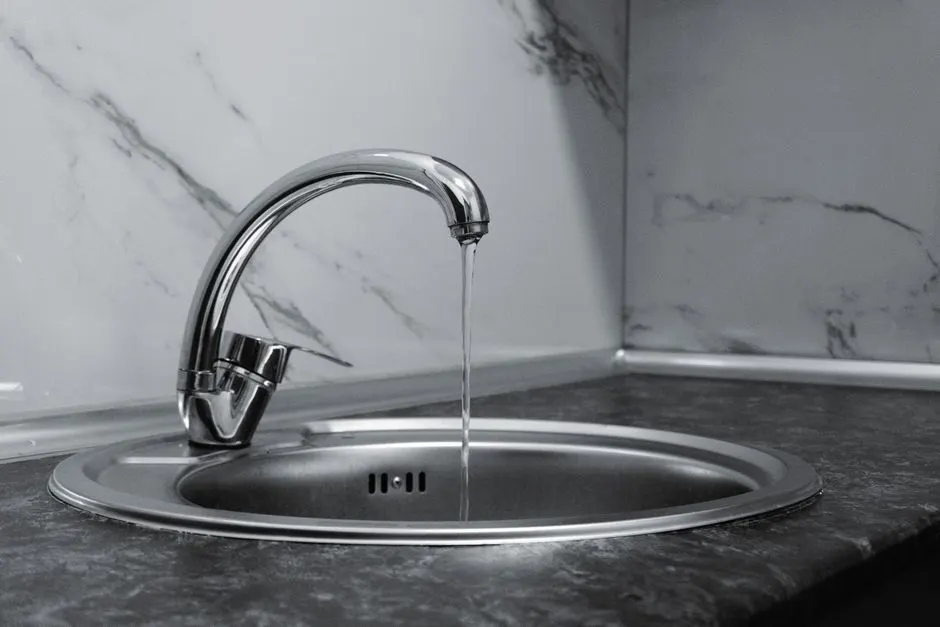
Your kitchen sink is draining slowly because something is restricting the flow inside the drain line - most often a layer of grease, soap, and food particles stuck to the pipe walls, or a partial blockage further down the line. In San Diego, that buildup gets worse faster than in most cities because our water runs hard and mineral-heavy, so scale and grease bond together inside the pipe. The rest of this post breaks down the real causes, what you can safely fix yourself, and when a slow kitchen drain in San Diego means you should call someone.
The short answer: what's blocking your kitchen drain
A slow kitchen drain is a restriction, not a mystery. Water still moves, just not fast enough, which tells you the pipe is partially open - usually 60% to 90% blocked by the time you notice.
Why is my kitchen sink draining so slowly san diego homeowners ask us this every week, and the honest answer is that kitchen drains are the most abused line in the house. They take grease, coffee grounds, rice, eggshells, pasta starch, soap scum, and whatever else goes down the disposal. None of that disappears. It coats the inside of the pipe, layer by layer, until the diameter shrinks and water starts pooling.
If you want the full picture of how we handle these calls across the county, our drain cleaning san diego CA service page covers the equipment and process we use on every job.
Why does my kitchen sink drain slowly in San Diego CA?
San Diego's water is the hidden variable most homeowners never consider. Our municipal supply runs hard - roughly 12 to 15 grains per gallon of hardness in many parts of the county - and that calcium and magnesium leaves mineral deposits inside your pipes over time.
Those deposits act like sandpaper. Grease and food particles stick to rough, scaled pipe walls far more easily than to smooth ones. In a newer home in Mission Valley with copper or PEX lines, a slow drain usually means straight grease buildup. In a 1920s bungalow in North Park or South Park with original galvanized steel, the pipe itself may be 70% closed off by rust and scale before any grease even enters the picture.
We see this split constantly. Older neighborhoods with cast iron and galvanized drains clog faster and need different tools than newer construction. If you're in one of those older blocks, it's worth knowing that North Park drain cleaning calls often involve descaling the pipe, not just clearing it.
Two other local factors matter:
- Restaurant density. If you live above or next to a commercial kitchen, shared sewer lines carry far more grease than a residential line ever would.
- Summer cooking load. From June through October, outdoor grilling and heavier home cooking push more fat down the drain than the rest of the year.
The five most common kitchen sink clog causes in San Diego
Almost every slow kitchen drain we clear in San Diego traces back to one of five causes. Here's what each one looks like and how fast it develops.
1. Grease buildup in the kitchen sink
Grease is the number one culprit, and it's deceptive because it leaves the pan as a liquid. Once it hits the cool pipe walls a few feet down, it congeals into a waxy paste that traps everything behind it. A single Thanksgiving-sized pour of bacon grease can start a clog that takes three months to fully close the line. Grease buildup in kitchen sink San Diego lines is worse than in cooler cities because our pipes stay warm enough to keep the grease soft and spread it further down the run.
2. Food particles and disposal misuse
Rice, pasta, coffee grounds, eggshells, potato peels, and fibrous vegetables like celery and corn husks are the usual suspects. A disposal doesn't dissolve food - it shreds it into smaller pieces that still settle and pack together. Rice and pasta starch are the worst because they swell with water and form a glue-like mass.
3. Soap scum and mineral scale
Dish soap combines with hard water minerals to form a sticky film inside the pipe. Over 18 to 24 months, that film hardens into scale that narrows the drain opening. This is why some San Diego homes need drain descaling san diego CA rather than a standard snaking - the blockage isn't a solid mass, it's a coating on the pipe wall.
4. A blocked P-trap or disposal trap
The curved pipe under your sink - the P-trap - is designed to catch debris and hold water to block sewer gas. When it fills with sludge, water drains slowly or gurgles. This is the easiest clog to reach and the one most homeowners can clear themselves.
5. A deeper line blockage or root intrusion
If the sink drains slowly and other fixtures in the house are also sluggish, the problem is past the P-trap and into the branch line or main sewer. Tree roots entering cracked clay or cast iron pipes are common in older San Diego neighborhoods with mature ficus and eucalyptus trees. This one needs a camera, not a plunger.
How to unclog a slow kitchen sink in San Diego
Start with the cheapest, least invasive fix and work up. Most slow kitchen sink fixes in San Diego take under 30 minutes if the clog is in the trap or the first few feet of pipe.
- Boil a full kettle of water. Pour it down the drain in two stages, waiting 30 seconds between. This melts light grease. It won't touch scale or a solid clog.
- Mix baking soda and vinegar. Half a cup of each, let it fizz for 10 minutes, then flush with hot water. Good for maintenance, weak against real blockages.
- Pull and clean the P-trap. Put a bucket underneath, unscrew the slip nuts by hand, and clear the sludge. This solves roughly a third of slow-drain calls on its own.
- Run the disposal properly. With cold water running, run the disposal for 20 to 30 seconds after the grinding noise stops. Cold water carries the particles through; hot water lets grease re-coat the pipe.
- Snake the branch line. A hand snake reaches 15 to 25 feet. If you hit resistance and can't break through, stop - you're likely at a fitting or a root mass.
If none of that restores full flow, the blockage is deeper than a homeowner tool can reach. That's when kitchen drain cleaning san diego CA with a professional auger or hydro jetter becomes the faster path.
What to watch out for: mistakes that make it worse
The wrong fix can turn a slow drain into a flooded cabinet or a damaged pipe. Here's what we see go wrong most often.
- Chemical drain cleaners. Products like Drano generate heat and rely on caustic soda or sulfuric acid. They eat through grease but also corrode older pipes, and they're dangerous if a plumber later has to work in that line. On a fully blocked drain, the chemical just sits there.
- Plunging a drain with a disposal. Never plunge a double-bowl sink without sealing the other drain and the disposal opening. You'll push water and debris into the disposal or up the other side.
- Pouring grease down "with hot water." Hot water moves the grease further down the line before it cools. That makes the eventual clog harder to reach.
- Ignoring a repeated slow drain. If the same sink slows down every 60 to 90 days, you're not clearing the clog - you're poking a hole through it. The buildup is still there.
One more: don't assume a slow drain means a big bill. Most single-fixture kitchen clogs in San Diego run $150 to $350 in 2026 pricing for a standard clearing. It's the ignored ones that turn into $1,200 to $4,000 sewer line repairs.
When to call a professional
Call a drain professional when more than one fixture is slow, when you've cleared the trap and the sink still backs up, or when you smell sewage near the sink.
Those three signs point past the kitchen and into the branch or main line. A camera inspection tells us in about 20 minutes whether it's grease, scale, roots, or a collapsed pipe - and that determines whether we snake, jet, or descale.
Our team at Drain Cleaning Experts San Diego handles kitchen drains every day, from single-family homes in Clairemont to restaurants in the Gaslamp Quarter. We clear the line, show you what came out, and tell you honestly whether you need a one-time fix or an ongoing maintenance plan. If you're in an older building with recurring problems, a preventive drain maintenance san diego CA visit once a year costs far less than emergency calls.
Frequently Asked Questions
Why is my kitchen sink draining slowly in San Diego?
Grease, food particles, and hard-water scale coating the pipe walls are the cause in about 80% of San Diego kitchen drains we clear. If more than one fixture is slow, the blockage is likely in the main line rather than the sink trap.
How do I fix a slow kitchen drain in San Diego CA?
Start with boiling water, then clean the P-trap, then run the disposal with cold water for 30 seconds. If flow doesn't return within 30 minutes, the clog is deeper than 25 feet and needs a professional auger or hydro jetter.
Does grease cause slow kitchen drains in San Diego?
Yes - grease is the single most common cause. It leaves the pan as liquid, cools inside the pipe, and hardens into a waxy layer that traps food. San Diego's hard water makes the grease stick faster than in softer-water cities.
Can I use Drano for a slow kitchen sink in San Diego?
We advise against it. Caustic drain cleaners can corrode older galvanized and cast iron pipes common in San Diego homes built before 1970, and they rarely clear a full blockage. Mechanical clearing is safer and more effective.
When should I call a drain cleaner in San Diego?
Call when two or more drains are slow, when the sink backs up after you've cleared the trap, or when you smell sewage. Those signs mean the blockage is in the branch or main line and needs a camera inspection.
Get help with drain cleaning in san diego
A slow kitchen sink is a warning, not a permanent condition. We clear kitchen drains across San Diego the same day you call, and we tell you exactly what was blocking the line before we leave.
Call Drain Cleaning Experts San Diego at +1 (619) 927-8567 and we'll get your sink draining like it should.